


Why Settling for Low-Quality Whey Protein is Killing Your Progress
Let's get straight to it. You’re putting in the work at the gym, tracking your macros, and pushing your limits. The last thing you need is a supplement that sabotages your results. Low-quality whey protein isn't just ineffective; it's a tub of wasted potential. We define it as any protein that has been heat-damaged (denatured), filled with cheap amino acids (spiked), or loaded with additives that disrupt your metabolism.
Think of it this way: your body uses protein as the building blocks for muscle, recovery, and overall health. Using low-quality blocks means you're building a weak foundation. This leads to the brutal frustration of wasted gym sessions, poor recovery, and nagging inflammation. At Fantastic Nutrition, our philosophy is simple: we've done the exhaustive research on sourcing and science so you don't have to. You just get the results.
According to What is Whey Protein?, this is a well-documented area of ongoing research and practical application.
The Bioavailability Factor: Why Not All 25g Are Created Equal
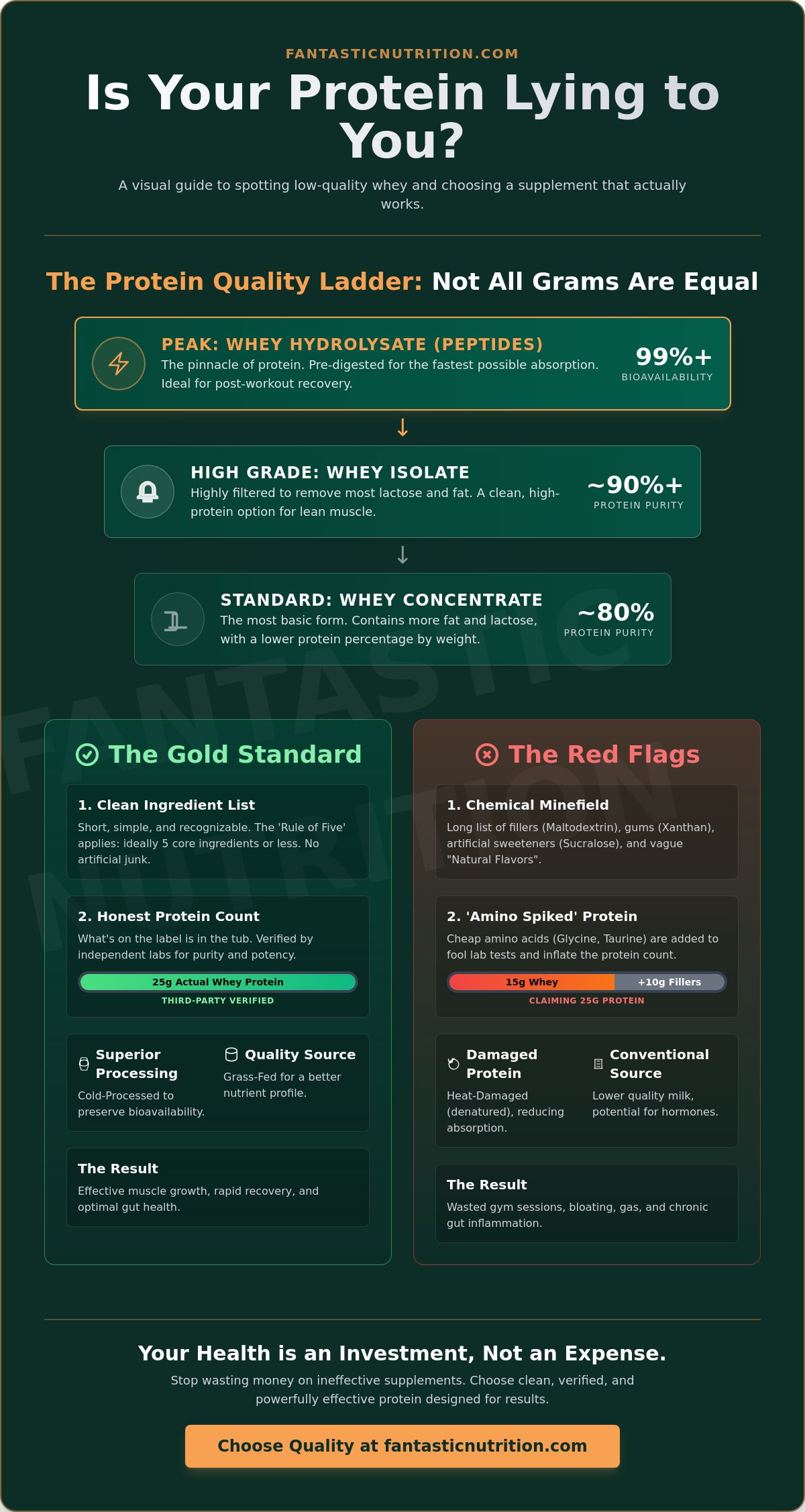
The number on the front of the tub can be misleading. A 25-gram serving of cheap, heat-damaged protein is not the same as 25 grams of a clean, cold-processed formula. The difference is bioavailability—how much of that protein your body can actually absorb and use. Low-quality processing makes protein harder to digest, meaning much of it goes to waste. There's a hierarchy of quality, from basic concentrate to cleaner isolate, and finally to ultra-fast absorbing whey hydrolysate (peptides), which represents the peak of protein efficiency.
The Long-Term Impact on Your Health Goals
The damage from cheap protein goes beyond stalled muscle growth. Artificial fillers, gums, and sweeteners can trigger chronic gut inflammation, leading to the bloating and discomfort you might be blaming on something else. This gut distress can cascade into other issues, like skin breakouts and persistent energy crashes. Choosing a high-quality, clean protein isn't just a short-term-gain strategy; it's a long-term investment in looking and feeling your best.
Red Flag #1: The Ingredient List is a Chemical Minefield
Your first and best tool for spotting low-quality whey is the ingredient list. Here’s a simple rule: if it’s long, complicated, and reads like a chemistry textbook, put it back on the shelf. A clean, high-quality protein should have a short, recognizable list of ingredients. Be ruthless in scanning for junk.
- The 'Rule of Five': Ideally, your protein powder shouldn't have more than a handful of core ingredients. Anything more is often just filler.
- Spot the Fillers: Watch out for cheap fillers like maltodextrin, dextrose, and soy lecithin, which are often used to bulk up the powder and cut costs.
- 'Natural Flavors' Trap: This term is notoriously vague. While sometimes legitimate, it can also hide a cocktail of synthetic chemicals. Truly clean brands are transparent about their flavoring.
For the ultimate clean label, nothing beats a pure, unflavored protein you can customize yourself. Check out our 3-in-1 Unflavored Whey for total control over your nutrition.
Research published by quality concerns surrounding whey protein shows that this is a well-documented area of ongoing research and practical application.
The Truth About Artificial Sweeteners like Sucralose and Aspartame
Here's the brutal truth: artificial sweeteners like sucralose, aspartame, and acesulfame potassium can wreak havoc on your gut microbiome—the delicate ecosystem of bacteria that governs your digestion, immune system, and even your mood. Studies suggest these non-caloric sweeteners can still trigger an insulin response, confusing your body's metabolic signals. That's why we choose natural, clean sweeteners like stevia to support your health, not compromise it.
Thickeners and Gums: Why Your Shake Feels Like a Milkshake
Ever wonder why some protein shakes have that thick, milkshake-like consistency? It's often thanks to added thickeners and gums like Xanthan Gum, Guar Gum, or Carrageenan. While they improve "mouthfeel," they are primarily used to mask a low protein-to-weight ratio and can be a major cause of digestive bloating and gas. A high-quality protein should mix smoothly without needing a slurry of industrial thickeners.
The 'Amino Spiking' Trap: How Brands Fake Their Protein Count
This is the supplement industry's dirtiest secret. It's called Nitrogen Spiking or "Amino Spiking," and it's a deliberate, deceptive tactic to fool you. Standard lab tests for protein measure nitrogen, and since all amino acids contain nitrogen, unethical companies dump cheap, non-essential aminos like glycine and taurine into their whey. This inflates the nitrogen reading, making it look like there's more whole protein than there actually is. Your "25g protein" shake could be delivering as little as 15g of actual muscle-building whey.
Why do they do it? To cut costs and boost profits at your expense. It's a brutal betrayal of your trust and your hard-earned money.
How to Spot Spiking on the Nutrition Facts Panel
You have to become a label detective. Look for red flags like a proprietary "Amino Acid Blend" listed high in the ingredients. If you see individual amino acids like glycine, taurine, or even creatine listed in the main ingredients, be very suspicious. A massive red flag is the absence of a "Typical Amino Acid Profile" on the label. Reputable brands are proud to show you the exact breakdown of essential amino acids in their product.
The Importance of Third-Party Lab Verification
How can you be sure? Trust, but verify. "Third-Party Verified" means a brand sends every batch of its product to an independent lab to test for purity, potency, and safety. This ensures what's on the label is what's in the tub—no amino spiking, no heavy metals, and no contaminants. At Fantastic Nutrition, we invest in this verification for every single batch because your peace of mind is non-negotiable.
The Ultimate Whey Quality Checklist: 4 At-Home Tests
Once you've bought a tub, you can run a few simple tests at home to gauge its quality. While not as precise as a lab test, these physical checks can reveal a lot about what you're really drinking.
- The Solubility Test: High-quality whey protein should dissolve easily in a shaker bottle with minimal effort. If you're left with excessive, stubborn clumps, it's often a sign of poor processing or cheap fillers.
- The Foam Factor: A little foam after a vigorous shake is normal. However, if your shake produces a thick, long-lasting foam that won't settle, it could indicate the presence of surfactants or other unwanted additives.
- The Smell and Taste Test: Clean, high-quality whey has a faint, pleasant, milky scent. If your powder smells overtly chemical, artificial, or stale, it's a clear warning sign. The taste should be clean, not masked by an overwhelming, cloying sweetness.
- The Gut Check: This is the most important test. Pay attention to how you feel 30-60 minutes after your shake. If you feel bloated, gassy, or heavy, your body is telling you the quality is low and it's struggling to digest it.
Solubility: Does it Mix or Does it Mess?
To perform the solubility test, just add one scoop to a glass of water and stir it with a spoon for 20-30 seconds. A premium whey will dissolve almost completely. Don't be alarmed by a few tiny particles—that's normal. What you're looking for are large, pasty clumps that refuse to break down. This is a tell-tale sign of low-grade concentrate or excessive fillers.
Texture and Mouthfeel Analysis
A quality protein should feel smooth. A "gritty" or chalky texture often points to low-grade raw materials. Be wary of a texture that feels overly thick or "creamy." As we mentioned, this is usually achieved with gums and thickeners, not superior protein. A clean protein shouldn't leave a sticky, unpleasant film on the roof of your mouth.
The Gold Standard: Why Grass-Fed and Cold-Processed Whey Wins
True quality starts at the source. There's a world of difference between whey from grain-fed, feed-lot cows and whey from healthy, grass-fed cows. Grass-fed whey is nutritionally superior, containing a better profile of Omega-3 fatty acids and Conjugated Linoleic Acid (CLA).
Equally important is the processing. The industry standard is high-heat pasteurization, a cheap method that "denatures" the protein, damaging the delicate, health-boosting sub-fractions like immunoglobulins and lactoferrin. Cold-processing is the gold standard, using filtering techniques that preserve the protein in its natural, most potent state.
For more on our commitment to quality, from our Bozeman, MT roots to our ingredient sourcing, learn more about the Fantastic Nutrition story.
The Final Step: Hydrolyzed for Brutal Efficiency
For those who refuse to settle, there's a level beyond even high-quality isolate. It’s called hydrolyzed whey, or whey peptides. This is whey that has been pre-digested with enzymes, breaking the long protein chains into smaller peptides. The result? The fastest-absorbing protein known to science. It gets to your muscles almost instantly, triggering a more rapid and powerful muscle-building and recovery response. When you see whey hydrolysate as the first ingredient, you know you're getting the absolute pinnacle of protein technology.
Living a Fantastic Life with Premium Nutrition
Your body is your most valuable asset. Stop fueling it with cheap fillers and deceptive formulas. You deserve a protein that works as hard as you do—one that delivers brutal results, not brutal side effects. We're so confident in the quality and taste of our whey that we back it with a 100-day money-back guarantee. You have nothing to lose and a new level of performance to gain.
Get Fantastic Nutrition and Live Fantastic!