


The "Protein Bloat" Reality: Why Your Shake Might Be Backfiring
You’re doing everything right. You crush your workouts, prioritize your nutrition, and mix a protein shake to refuel your body. But instead of feeling strong and fantastic, you’re left with a gurgling stomach, uncomfortable gas, and that dreaded “protein bloat.” It’s frustrating when the very supplement meant to help you achieve your goals ends up making you feel physically uncomfortable.
If you’re tired of the digestive drama, you’re in the right place. We’ve done the research for you, cutting through the noise to give you the straight talk on why your protein shake might be turning on you. Think of this as your roadmap to a bloat-free life, where you can get all the benefits of whey protein without the uncomfortable side effects. (Whey protein)
Common Symptoms of Whey-Induced Distress
Gas, bloating, and those tell-tale “rumbles” are your body’s way of sending a signal. For most people, this is a sign of digestive difficulty, not a full-blown allergy. A true milk allergy involves an immune response with symptoms like hives or wheezing, which is very different from the temporary discomfort of protein bloat.
To figure out what’s going on, pay attention to the timing. Does the discomfort hit minutes after you finish your shake, or does it take a few hours to set in? Tracking your symptoms is the first step to pinpointing the root cause and finding a solution that works for you.
Is It the Whey or Is It You?
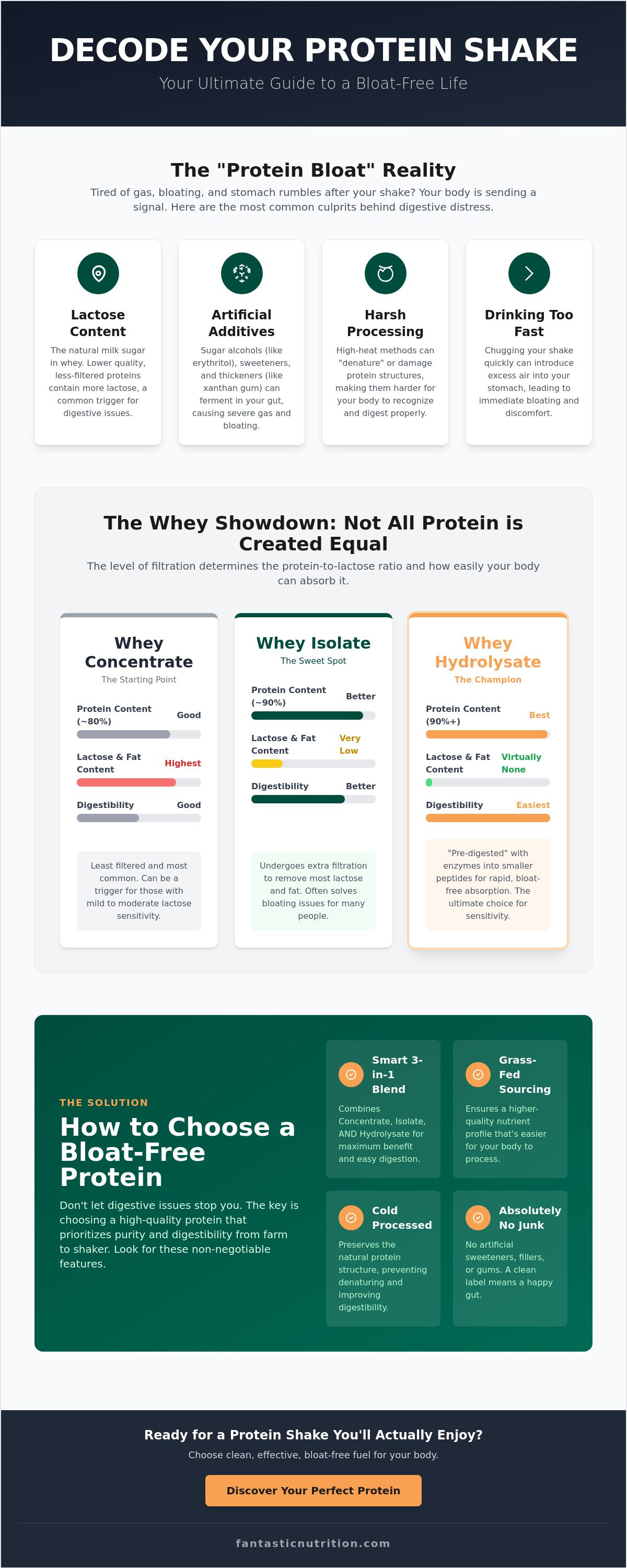
Everyone’s gut is unique. Your individual microbiome can react differently to a large, fast-absorbing dose of protein. Sometimes, the issue is as simple as how you drink your shake. Chugging it in 30 seconds can introduce a lot of excess air into your stomach, leading to immediate bloating. Furthermore, the quality and sourcing of the whey itself play a massive role. The nutrient profile of whey from grass-fed cows is different from that of grain-fed cows, which can impact how easily your body processes it.
Lactose, Processing, and Filtering: The Technical Side of Tummy Troubles
At its core, whey is a byproduct of cheese-making, which means it starts as dairy and naturally contains lactose (milk sugar). For many people, lactose is the primary culprit behind their digestive issues. However, the amount of lactose in your final scoop of powder depends entirely on how it’s filtered and processed. High-quality, bioavailable protein is far easier for your body to absorb, which is why we’re obsessed with Good Manufacturing Practices that ensure purity from farm to shaker.
Concentrate vs. Isolate vs. Hydrolysate
Not all whey is created equal. The level of filtration creates three distinct types, each with a different protein-to-lactose ratio. Understanding them is key to finding your gut’s happy place. (alleviate the digestive burden)
- Whey Concentrate: This is the most common and least filtered form. It contains the most lactose and fat, which can be a trigger for those with sensitivities.
- Whey Isolate: This form undergoes additional filtration to remove the vast majority of lactose and fat. For many, switching to an isolate is the "sweet spot" that solves their bloating issues. You can learn more in our in-depth guide to isolate vs. concentrate.
- Whey Hydrolysate: This is the champion of digestibility. Hydrolyzed whey has been "pre-digested"—broken down with enzymes into smaller protein fragments called peptides. This means your gut has to do far less work, allowing for rapid, bloat-free absorption.
At Fantastic Nutrition, we didn’t want you to have to choose. Our Whey Fantastic 3-in-1 Blend combines grass-fed concentrate, isolate, AND hydrolysate to give you the best of all worlds: a complete amino acid profile with unparalleled digestibility.
The Problem with High-Heat Processing
Many mass-market brands use high-heat processing to pasteurize their whey. The problem? Extreme heat can "denature" or damage the delicate protein structures. Your gut has a harder time recognizing and breaking down these damaged proteins, which can lead to inflammation and digestive distress. We advocate for cold-processed methods that preserve the protein’s natural integrity, making it gentler on your stomach and more effective for your muscles.
The Hidden Culprits: Why Artificial Sweeteners and Gums are the Real Villains
Let’s be honest: if your digestive issues persist even after trying a high-quality whey isolate, the protein itself might not be the problem. Many popular protein powders are loaded with artificial sweeteners, fillers, and thickeners designed to mask the taste of low-quality whey and create a "creamy" texture. These additives can wreak havoc on your gut, and when combined, their negative effects can be even worse.
This is central to our "Reason to Believe" at Fantastic Nutrition: we use clean labels with no added sugars, fillers, or junk. Period. (WebMD on whey protein side effects)
Sugar Alcohols and Artificial Sweeteners
That "sugar-free" label isn't always your friend. Sugar alcohols like erythritol, xylitol, and sorbitol are notorious for their laxative effect. They aren't fully absorbed by the body, so they travel to the large intestine where they can ferment and draw in water, causing gas, bloating, and diarrhea. Natural, zero-calorie options like Stevia or Monk Fruit are generally much better tolerated and are the only sweeteners you’ll find in our flavored products.
The Role of Gums and Fillers
Ever wonder how cheap protein powders get that thick, milkshake-like texture? The answer is often gums like Xanthan Gum or Guar Gum. While generally recognized as safe, these thickeners are soluble fibers that can ferment in your gut. For sensitive individuals, this fermentation process produces excess gas, leading directly to that uncomfortable bloat. Learning to read a supplement label like a pro is the best way to spot and avoid these hidden gut bombs.
How to Stop Digestive Issues from Whey Protein (Without Giving Up Your Gains)
You don't have to ditch the superior amino acid profile of whey to feel good. With a few strategic adjustments, you can get the results you want without the digestive drama. Here is our 5-step "Straight Talk" plan to get your gut back on track.
Adjusting Your Dosage and Timing
Sometimes the simplest fix is the most effective. If you’re currently taking a full scoop, try starting with a half-scoop to give your digestive enzymes time to adapt and catch up. Proper hydration is also crucial for helping your body metabolize protein efficiently, so make sure you’re drinking plenty of water throughout the day. For some, drinking a shake on a completely empty stomach can be too much, too fast. Try having it with a small handful of nuts or after a light meal.
Stacking for Better Digestion
You can support your digestive system by pairing your whey with the right partners. Taking a digestive enzyme complex with your shake can help break down lactose and proteins more efficiently. You can also support your overall gut health with a daily probiotic. And if you're looking to build a total performance stack, you can absolutely mix creatine into your protein shake for a powerful, convenient boost.
Choosing the Right Fuel: Why Clean, Grass-Fed Whey Changes the Game
The final and most important piece of the puzzle is the quality of your whey. The "Grass-Fed" difference is about more than just a buzzword; it’s about a fundamentally cleaner, healthier, and more digestible product. Cows that graze on pasture as nature intended produce milk with a superior nutritional profile, including more healthy Omega-3 fats and CLA. Happy, healthy cows produce better milk, which makes better whey.
At Fantastic Nutrition, we are absolutely committed to providing clean, sustainable, and effective fuel. All our products are non-GMO, soy-free, and made with the highest quality ingredients because we believe you should never have to compromise your health to reach your goals.
The Fantastic Nutrition Standard
From our roots in Bozeman, Montana, we built this company on a direct-to-consumer model to cut out the middlemen and deliver premium quality without the premium price tag. Every batch of our protein is third-party lab verified for purity and potency, so you know exactly what you’re putting in your body. We believe that a clean, grass-fed whey protein is the key to a bloat-free experience, and we back it up with a 100-day money-back guarantee to make your choice completely risk-free.
Conclusion: Get Fantastic Nutrition and Live Fantastic!
So, does whey protein cause digestive issues? The science says it’s rarely the whey itself, but the lactose, additives, and poor-quality processing that come with it. By choosing a clean, cold-processed, grass-fed whey blend that’s free of artificial junk, you can finally put an end to protein bloat.
Don’t settle for feeling just "okay" after your workout. It's time to take a proactive approach to your health and demand better from your supplements. It's time to be Fantastic.