
Soy Free Protein Powder: The 2026 Guide to Clean Performance
August 02, 2026 · Fantastic Nutrition

Why are you still settling for a protein shake that leaves you feeling heavy and bloated before your day even begins? It's a common trap for high-achievers who want the best for their bodies but end up with supplements full of industrial fillers. Finding a high-quality soy free protein powder shouldn't feel like a complex chemistry project; it should be the simplest part of your morning routine.
We know how frustrating it is to deal with digestive discomfort or the confusion surrounding phytoestrogens and hormone balance. You're working hard to stay fit and active, so your nutrition should support those goals, not complicate them. We've done the research for you to ensure you don't have to guess about what's actually inside your tub.
In this 2026 guide, you'll discover exactly why so many people are ditching soy for better performance and clean energy. We'll show you how to spot hidden derivatives and choose a premium, clean-label protein that actually tastes great. It's time to fuel your body with the quality it deserves so you can achieve your fitness goals and live fantastic.
Key Takeaways
- Understand why the shift toward clean-label supplements is essential for performance and how to avoid the bloating caused by common industrial fillers.
- Learn the truth about how phytoestrogens and GMOs in soy can impact your hormone balance and overall digestive health.
- Discover why choosing a high-quality soy free protein powder like grass-fed whey offers superior bioavailability for muscle recovery compared to plant-based alternatives.
- Master the art of reading supplement labels to identify hidden soy derivatives and "natural flavors" that might be sabotaging your clean nutrition goals.
- Find out how a Bozeman-based commitment to third-party testing and purity ensures you get a premium protein that fuels your active lifestyle.
Why the Shift to Soy Free Protein Powder Matters in 2026
In 2026, the standard for what we put in our bodies has reached a new peak. High-achievers are no longer satisfied with "good enough." They want precision. This is why the shift toward soy free protein powder is more than just a passing trend. It's a calculated move for those who treat their nutrition as a vital component of their success. Truly soy-free supplements are devoid of soy isolates, soy flour, and the ubiquitous soy lecithin.
The "Clean Label" movement has taken over because people are tired of the clutter. You work out several times a week and manage a career. You don't have time for bloating caused by cheap fillers. Historically, soy became the industry standard because it was a cost-cutting dream for manufacturers. It's inexpensive to produce and easy to hide. However, this soy protein overview explains how these industrial processes often strip away the very quality you are looking for in a supplement. By removing these inflammatory fillers, you aren't just cleaning up your diet; you're reclaiming your energy and feeling younger.
The Hidden Presence of Soy in Supplements
Soy lecithin is the invisible guest in most protein shakes. It acts as an emulsifier to help the powder dissolve, but it's often a sign of a formula that relies on shortcuts. Then there's soy protein isolate. This is a budget-friendly staple that fills out the protein count without offering the high-tier bioavailability your muscles need. We believe in straight talk at Fantastic Nutrition. We avoid these shortcuts because we've done the research for you. Our Bozeman-based team is committed to providing efficacious products that offer real value, not just a lower price tag.
Who Should Be Looking for Soy-Free Alternatives?
While anyone can benefit from a cleaner label, certain groups find soy-free options essential. If you are one of the millions with soy sensitivities, avoiding this major allergen is a non-negotiable for digestive comfort. Soy is currently recognized by the FDA as one of the nine major food allergens requiring clear declaration. Others are focused on hormonal health. Phytoestrogens in soy can mimic estrogen, which is a concern for those trying to maintain a tight hormonal balance for peak performance. Finally, if you're a fitness enthusiast, you want the highest bioavailability possible. You want every gram of protein to count toward muscle synthesis, not just fill a quota.
The Science of Soy: Phytoestrogens, GMOs, and Digestion
If you’re over 30, you know your body doesn’t bounce back quite like it used to. You can’t afford to waste a workout on a protein that works against your physiology. While soy is often marketed as a healthy plant-based staple, the science behind its use in concentrated supplements tells a more complicated story. Choosing a soy free protein powder isn't just about avoiding an allergen. It's about protecting your performance from the baggage that industrial soy brings to the table.
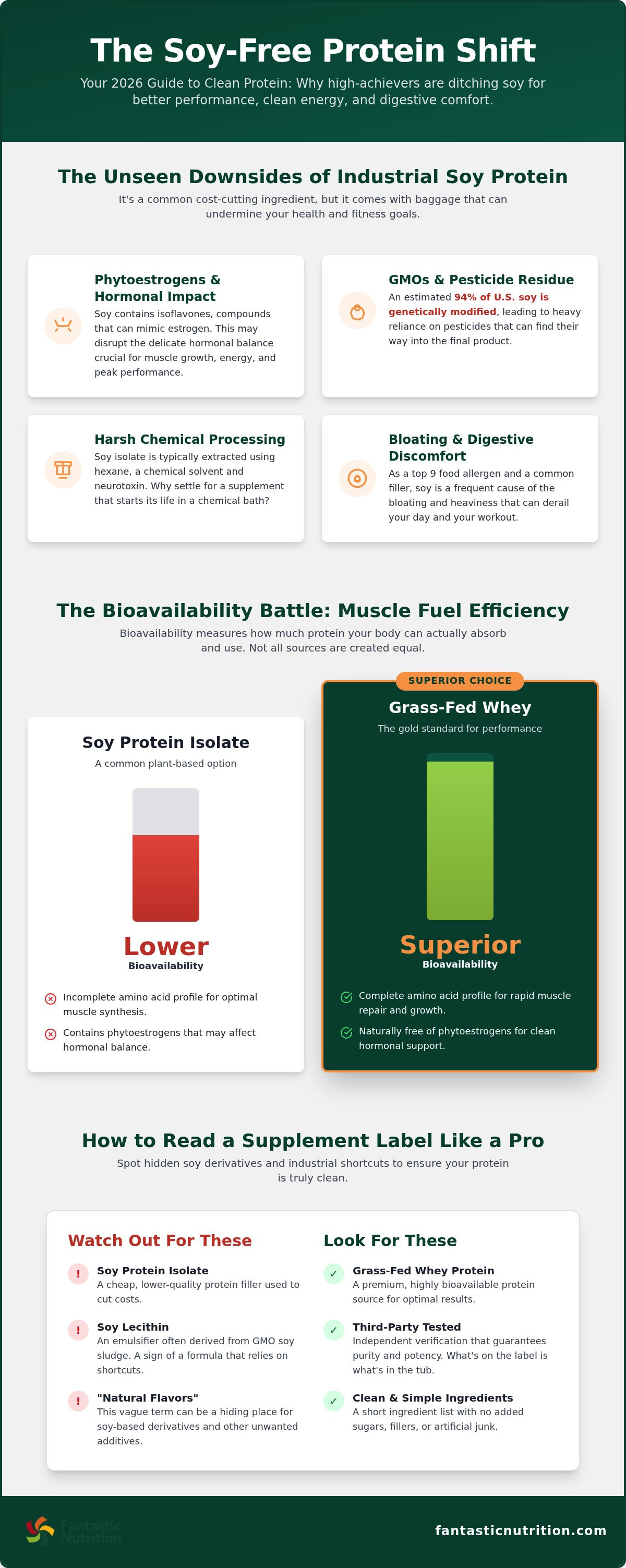
The primary concern for many active adults is the presence of isoflavones. According to Harvard's analysis of soy, these compounds are a type of phytoestrogen that can mimic the hormone estrogen in the human body. For high-achievers looking to maintain a lean, strong physique, introducing compounds that potentially interfere with hormonal signaling is a risk they'd rather not take. Beyond the hormones, there is the issue of purity. Currently, 94 percent of all soybeans grown in the United States are genetically modified. This leads to a heavy reliance on glyphosate and other pesticides that find their way into the final powder.
Even more concerning is the "dirty" secret of soy protein extraction. Most soy protein isolate is processed using hexane, a chemical solvent and neurotoxin used to separate the oil from the bean. While manufacturers claim only "trace amounts" remain, why settle for a supplement that started its life in a chemical bath? Straight talk: your body deserves a clean source of fuel, not a byproduct of industrial chemistry.
Hormonal Balance and Performance
Maintaining an optimal testosterone-to-estrogen ratio is vital for muscle growth, energy levels, and mental clarity. Soy isoflavones can act as endocrine disruptors, potentially throwing this delicate balance out of sync. Proactive health means minimizing these disruptors wherever possible. Achieving a "Fantastic" life through hormone-optimized nutrition isn’t a luxury. It’s a requirement for high-performers who want to look and feel younger while crushing their fitness goals.
Digestion and Nutrient Absorption
Soy is notorious for causing bloating and digestive discomfort, often due to its high concentration of antinutrients like lectins and phytates. Antinutrients are plant compounds that can block or interfere with how your body absorbs essential minerals and vitamins. When you switch to a clean protein source, you’ll notice an immediate difference in how you feel after a shake. Less bloat means better recovery and more energy for your next session. If you want a clean start, consider exploring our unflavored grass-fed whey protein for a truly pure experience.
Soy vs. Grass-Fed Whey: The Bioavailability Battle
Why does one 25g scoop of protein leave you feeling energized while another just sits like a brick? It all comes down to bioavailability. When you're hunting for a high-quality soy free protein powder, you aren't just avoiding an allergen. You're looking for a fuel source that your body can actually use. Scientists use the PDCAAS (Protein Digestibility Corrected Amino Acid Score) to measure protein quality. While you might see the official FDA health claim for soy protein regarding heart health on some labels, it doesn't mean soy is the champion of muscle growth or recovery.
Whey remains the gold standard for muscle protein synthesis for a reason. It's packed with Leucine. This specific branched-chain amino acid (BCAA) acts as the "on switch" for muscle building. Soy often falls short in this department. Beyond the amino acids, choosing grass-fed whey provides a significant advantage over grain-fed or soy-based options. You get a higher concentration of Omega-3 fatty acids and Conjugated Linoleic Acid (CLA). These nutrients support overall health and a leaner physique while you work toward your fitness goals.
Why Bioavailability is the Key to Results
Intake is not the same as absorption. You can swallow 30 grams of protein, but if your gut can't process it, those grams are wasted. Our Fantastic Nutrition Grass-Fed Whey is designed to be usable fuel that enters your bloodstream quickly. We've focused on purity to ensure you get the results you work for. If you want a deeper dive into why the source of your dairy matters, check out our sibling guide: Grass Fed Whey Protein: The Ultimate Guide to Clean Performance in 2026.
Plant-Based Alternatives for the Soy-Free Athlete
If you're following a vegan lifestyle, you still have plenty of options like pea, rice, and hemp. Navigating the soy-free vegan landscape can be tricky because most plant sources aren't "complete" proteins on their own. You often have to blend them to get a full amino acid profile. For many of our customers, collagen peptides serve as an essential soy-free recovery tool. While collagen isn't a complete protein for muscle building, its unique amino acids are vital for supporting the joints and skin of active adults.
How to Read a Supplement Label Like a Pro
Front-of-package marketing is designed to catch your eye and make a sale. The back of the package is where the truth lives. Finding a genuine soy free protein powder requires a bit of detective work because soy is often hidden under aliases that most consumers miss. We believe in straight talk here. Many brands claim to be clean while still using soy based emulsifiers to make their products mix better. It’s a shortcut that prioritizes convenience over your long term health goals.
Most people don't realize that nearly 90 percent of whey proteins on the market contain soy lecithin. It’s the industry's favorite tool for preventing clumps, but it’s exactly what you want to avoid if you’re serious about a clean lifestyle. You also need to know the difference between "Soy-Free" and "No Soy Ingredients." A label that says "No Soy Ingredients" might still be processed on equipment that handles soy. A true soy-free claim implies much stricter testing and validated cross-contact controls. This is why third-party lab verification is non-negotiable. It’s the only way to be 100 percent certain that what’s on the label is exactly what’s in your scoop.
5 Red Flag Ingredients to Avoid
When you're scanning the fine print, keep your eyes peeled for these common offenders that sneak into your supplements:
- Soy Lecithin: The most frequent emulsifier used in powders.
- Soy Isolates: A cheap, highly processed protein source.
- Textured Vegetable Protein (TVP): Often used as a filler to bulk up the product.
- "Natural Flavors": A broad term that can legally include soy-based carriers.
- Artificial Sweeteners: Ingredients like sucralose often accompany cheap soy proteins to mask their taste.
For a complete breakdown of what to look for in 2026, check out The Ultimate 2026 Guide to Protein Supplements: Fuel Your Fantastic Life. Avoiding these chemical shortcuts ensures your body spends its energy on recovery rather than processing junk.
What a "Clean Label" Actually Looks Like
A clean label is refreshingly simple. You should see a very short list of ingredients that you can actually pronounce. Look for non-GMO and Gluten-Free certifications to ensure the source material meets high standards for purity. Fantastic Nutrition uses only essential, high-quality ingredients because we believe your body performs best when it isn't bogged down by unnecessary fillers. We’ve done the research for you so you can focus on crushing your fitness goals. If you're ready to experience the difference of a truly pure formula, browse our soy-free supplement line today.
Live Fantastic: The Fantastic Nutrition Soy-Free Solution
Choosing a supplement brand shouldn't feel like you're being sold a used car. You want honesty, transparency, and products that actually deliver on their promises. At Fantastic Nutrition, we’ve built our entire philosophy around the idea that you deserve a soy free protein powder that matches your high standards. Based in Bozeman, Montana, our team is deeply committed to the principles of purity and efficacy. We don't just take our suppliers' word for it; we verify every batch. Third-party lab testing is a mandatory part of our process to ensure our formulas are free from the hidden soy derivatives and industrial fillers we’ve discussed in this guide.
We also believe that premium nutrition should be accessible to everyone who is proactive about their health. By eliminating the middleman and selling directly to you, we can offer top-tier, clean-label ingredients at a much fairer price. This direct-to-consumer model allows us to invest more in the quality of our raw materials, from our grass-fed whey to our Collagen Peptides. Even our packaging reflects our commitment to a better lifestyle. We use recyclable materials because we believe a healthy body shouldn't come at the expense of a healthy planet.
Our Grass-Fed 3-in-1 Whey Blend
Our flagship Grass-Fed 3-in-1 Whey Protein Blend is the perfect example of how we balance taste, purity, and performance. Whether you choose our Vanilla or Chocolate flavors, you can trust that your shake is 100 percent soy-free. We’ve worked hard to create a best-in-class taste without relying on soy lecithin or artificial junk. If you're looking to maximize your strength and recovery, try stacking your soy free protein powder with our Creatine Monohydrate plus myHMB. It’s a powerful, soy-free stack partner designed to help you build more muscle and improve lean body mass.
Join the Fantastic Community
We want to be more than just a brand; we want to be your trusted friend on your health and fitness journey. We’ve done the research for you so you can stop stressing over complicated labels and start focusing on your next workout. To make your life even easier, we offer a subscription service so you never run out of clean fuel. This ensures you always have the high-quality nutrition you need to look and feel younger. It’s time to stop settling for average supplements that hold you back. Get Fantastic Nutrition and Live Fantastic!
Take Command of Your Clean Performance Today
You've done the hard work of learning what really goes into your supplements. We've uncovered the hidden soy aliases and the science behind why bioavailability is the only metric that truly matters for your recovery. Now you can stop guessing and start fueling your body with the precision it deserves. Choosing a premium soy free protein powder is about more than just avoiding bloating; it's about giving your body the high-quality, usable fuel required to crush your goals.
At Fantastic Nutrition, we've done the research so you don't have to. Our formulas are Third-Party Lab Verified, Grass-Fed & Non-GMO, and contain absolutely no artificial fillers or sugars. We're here to help you look and feel younger while you maintain your active lifestyle. It's time to ditch the industrial shortcuts and join a community that values purity as much as you do.
Shop the Cleanest Soy-Free Protein at Fantastic Nutrition and take the next step in your health journey. Get Fantastic Nutrition and Live Fantastic!
Frequently Asked Questions
Is soy-free protein powder better for muscle growth?
Soy-free protein powder is often superior for muscle growth because it typically relies on higher-quality sources like grass-fed whey. Whey contains significantly more leucine than soy, which is the essential amino acid that triggers muscle protein synthesis. By choosing a cleaner formula, you avoid inflammatory fillers that can hinder your recovery. This allows your body to focus entirely on rebuilding muscle tissue after a tough training session.
Does whey protein usually contain soy?
Yes, a surprisingly high number of whey protein products on the market contain soy derivatives. Most manufacturers use soy lecithin as an emulsifier to help the powder dissolve quickly in water or milk. While this makes the shake more convenient to mix, it introduces a major allergen and industrial filler that many proactive health enthusiasts prefer to avoid. We believe in providing fuel that's as clean as possible for your body.
Why do companies put soy lecithin in protein powder?
Companies use soy lecithin primarily as an instantizing agent to prevent the powder from clumping when stirred. It is an inexpensive byproduct of soybean oil production, making it a cost-effective choice for large-scale supplement brands. We skip this shortcut at Fantastic Nutrition because we believe your health shouldn't be traded for slightly better mixability. You deserve a product that prioritizes your long-term wellness over manufacturing convenience and corporate cost-cutting.
Can soy-free protein powder help with bloating?
Switching to a soy free protein powder can significantly reduce digestive discomfort and bloating. Soy contains antinutrients like lectins and phytates that often cause gas and a heavy feeling in the gut. By removing these irritants, your digestive system can focus on absorbing nutrients rather than managing inflammation. This change helps you feel lighter and more energetic, especially when you're working out several times a week and need fast recovery.
Is soy-free protein better for hormone balance?
Choosing soy-free options is generally better for hormone balance because it eliminates exposure to phytoestrogens. These plant-based compounds can mimic estrogen in the body, which is a concern for men and women trying to optimize their testosterone-to-estrogen ratios. Minimizing these endocrine disruptors is a smart move for anyone focused on longevity and performance. It's all about keeping your body's natural chemistry working for you, not against you as you age.
What is the best soy-free protein for someone with a sensitive stomach?
Grass-fed whey isolate or unflavored collagen peptides are usually the best options for those with sensitive stomachs. These proteins are highly bioavailable and lack the complex fibers or chemical additives that trigger digestive distress. Our unflavored 3-in-1 blend is specifically designed to be easy on the gut while providing premium fuel. It's the perfect choice for anyone who wants to achieve their fitness goals without the discomfort of traditional, filler-heavy powders.
Are Fantastic Nutrition products third-party tested for soy?
Yes, we prioritize purity by ensuring our products are third-party lab verified for quality. This rigorous testing confirms that our soy free protein powder meets our strict standards and is free from cross-contamination. We want you to have total confidence that what's on our label is exactly what goes into your body. This commitment to transparency is how we act as a trusted friend and reliable resource in your health journey.
Is pea protein always soy-free?
While pea protein is naturally soy-free, it isn't always safe from cross-contamination during the manufacturing process. Many facilities process both soy and pea proteins on the same equipment, which can lead to trace amounts of soy in the final product. Always look for brands that specifically test for allergens and provide lab results. This ensures you're getting a truly clean supplement that won't sabotage your dietary needs or your performance goals.